Non-surgical options
Bunion treatment without surgery: what really helps
Last updated · Written by the BunionEase UK team
Quick answer
Most people can ease bunion pain without surgery. The NHS suggests wide shoes with a low heel, bunion pads, ice packs, painkillers and, from a podiatrist, insoles or toe spacers. A bunion corrector can add support at home. None of these remove the bump, but they can make everyday life more comfortable.
Can you treat a bunion without surgery?
You can't remove a bunion without surgery, because it's a change in the bones of the foot. But you can often treat the symptoms, such as pain, swelling and rubbing, at home.
The NHS says surgery is usually only considered if pain is severe and self-help hasn't worked. So for most people, non-surgical care is the place to start.
Non-surgical bunion treatments compared
| Option | What it helps | Where to get it |
|---|---|---|
| Wide, low-heeled shoes | Less pressure and rubbing | Shoe shops |
| Bunion pads and gel sleeves | Cushion the bump in shoes | Pharmacies, online |
| Ice pack (up to 5 min) | Short-term pain and swelling | At home |
| Paracetamol or ibuprofen | Pain relief | Pharmacies |
| Insoles or orthotics | Foot position and pressure | Podiatrist, pharmacies |
| Toe spacers | Light separation of the toes | Pharmacies, online |
| Bunion splint or corrector | Support for the big toe at rest | Online |
| Foot exercises | Mobility and strength | At home |
1. Change your shoes
Footwear is the single biggest everyday factor. Look for a wide, deep toe box, a low heel, a soft upper and laces or straps you can adjust. Avoid pointed toes and high heels, which push the big toe inwards.
2. Cushion the bump
Bunion pads and gel sleeves sit over the bump to stop it rubbing on your shoe. They're cheap, easy and work well alongside other options.
3. Ease pain and swelling
Hold an ice pack wrapped in a towel on the area for up to 5 minutes at a time, and take over-the-counter painkillers if you need them. Losing weight, if you're overweight, also takes pressure off your feet.
4. Support the toe at home
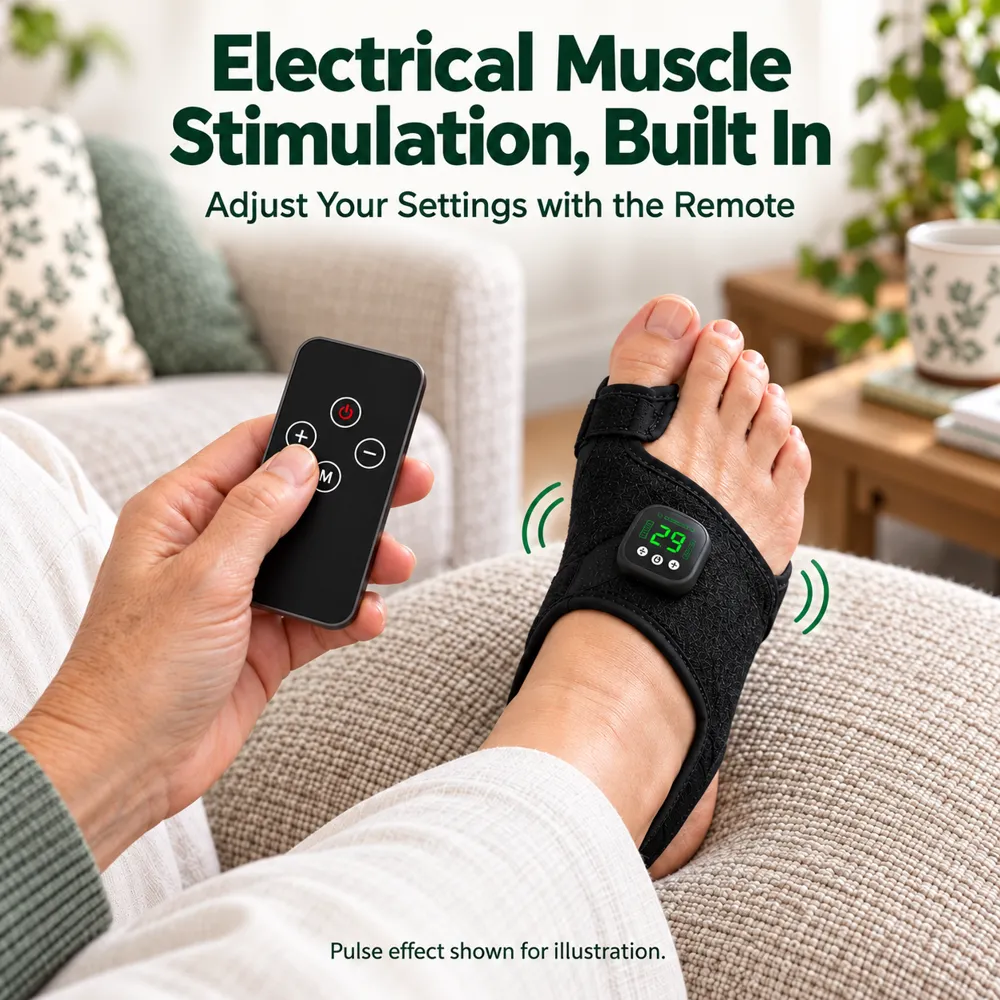
A bunion corrector holds the big toe in a straighter position while you wear it. BunionEase combines an aluminium toe splint with gentle AlignPulse EMS, used for about 15 minutes a day while you sit. It's a comfort routine, not a cure.
5. Keep your feet moving
Gentle toe exercises, like toe spreading, towel scrunches and big-toe circles, can help keep the joint mobile. See our bunion exercises guide for step-by-step instructions.
When surgery might be needed
Speak to your GP if pain stops you doing everyday activities, the bunion is getting worse, self-help hasn't helped after a few weeks, or you have diabetes. They may refer you to a specialist to talk about surgery.
BunionEase is a comfort and support device. It is not intended to diagnose, treat or cure any medical condition. See your GP or a podiatrist if pain is severe or getting worse. Do not use the EMS function if you have a pacemaker or other implanted device, are pregnant, have epilepsy, or have broken skin on the foot.
Adding BunionEase to your routine
BunionEase is designed to sit alongside good shoes and pads. Wear pads in shoes by day, then relax with BunionEase for 15 minutes in the evening. Choose the Left or Right Single Pack, or the Both Feet Duo Pack with free tracked UK delivery, all with a 90-day money-back guarantee.
Common questions
Can bunions be reversed naturally?
No. The bone change stays. Natural steps like better shoes and exercises can ease the symptoms.
What is the best non-surgical treatment for bunions?
Roomy, low-heeled shoes are the foundation. Pads, ice, painkillers, insoles and correctors can all help on top.
Do toe separators help bunions?
They can ease pressure between the toes and some people find them comfortable. They don't remove the bunion.
How can I stop my bunion getting worse?
Avoid tight and high-heeled shoes, keep active and see a podiatrist for advice that suits your feet.
Is surgery the only option?
Surgery is the only way to remove a bunion, but many people manage well without it.
Can I get help on the NHS?
Yes. Speak to your GP, who may refer you to an NHS podiatrist or specialist.