
How it works
How to use a bunion corrector: how BunionEase works, step by step
Last updated · Written by the BunionEase UK team
Quick answer
BunionEase combines an aluminium toe splint with AlignPulse, gentle electrical muscle stimulation (EMS), in one rechargeable device. To use it, sit down, slip your big toe into the toe loop, fasten the midfoot and heel straps snugly, switch on and pick a comfortable level with the remote, then relax for about 15 minutes.
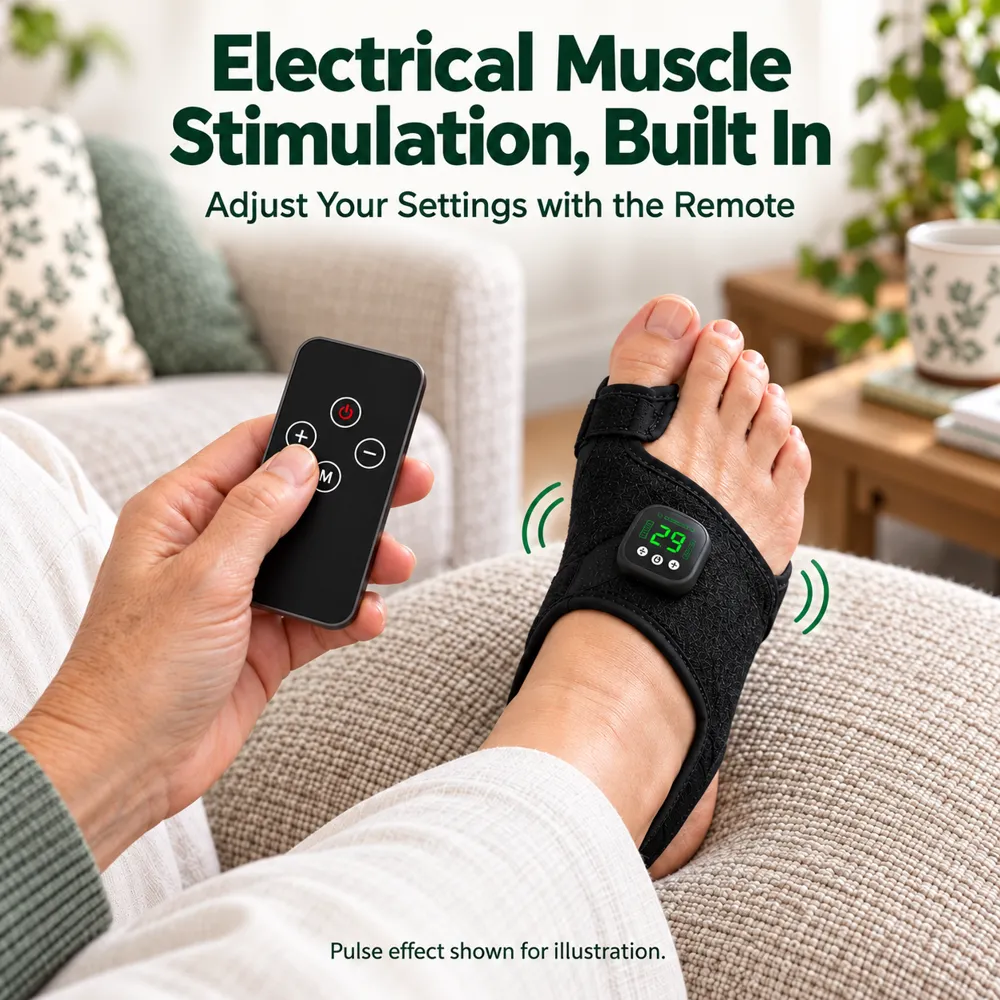
How does a bunion corrector work?
A bunion is a bony lump at the base of the big toe, where the toe has started to lean towards the others. The NHS explains that bunions can't be removed without surgery, but that comfortable shoes, bunion pads and toe supports can help ease the discomfort day to day.
A bunion corrector is a toe support. It holds the big toe in a straighter, more natural position for as long as you wear it, which many people find takes the pressure off the joint. It works while it's on; it doesn't change the bone permanently, and any page that promises that should be treated with caution.
BunionEase adds a second part, AlignPulse EMS, so your session is two things at once: gentle support from the splint, and light pulses that make the small muscles of the foot contract and relax.
The parts of BunionEase AlignPulse
| Part | What it does |
|---|---|
| Aluminium toe splint | A firm but lightweight frame that supports the big toe in a more natural position while worn |
| AlignPulse EMS | Mild electrical pulses that make the foot's small muscles gently contract and relax |
| Wireless remote | Change the level or switch off without bending down to your foot |
| Three-point fastening | Toe loop, midfoot strap and heel strap keep it secure and in place |
| Rechargeable battery | No disposable batteries; charge with the included UK plug charger |
What's in the box
Every pack is covered by our 90-day money-back guarantee, so you can try it at home first.
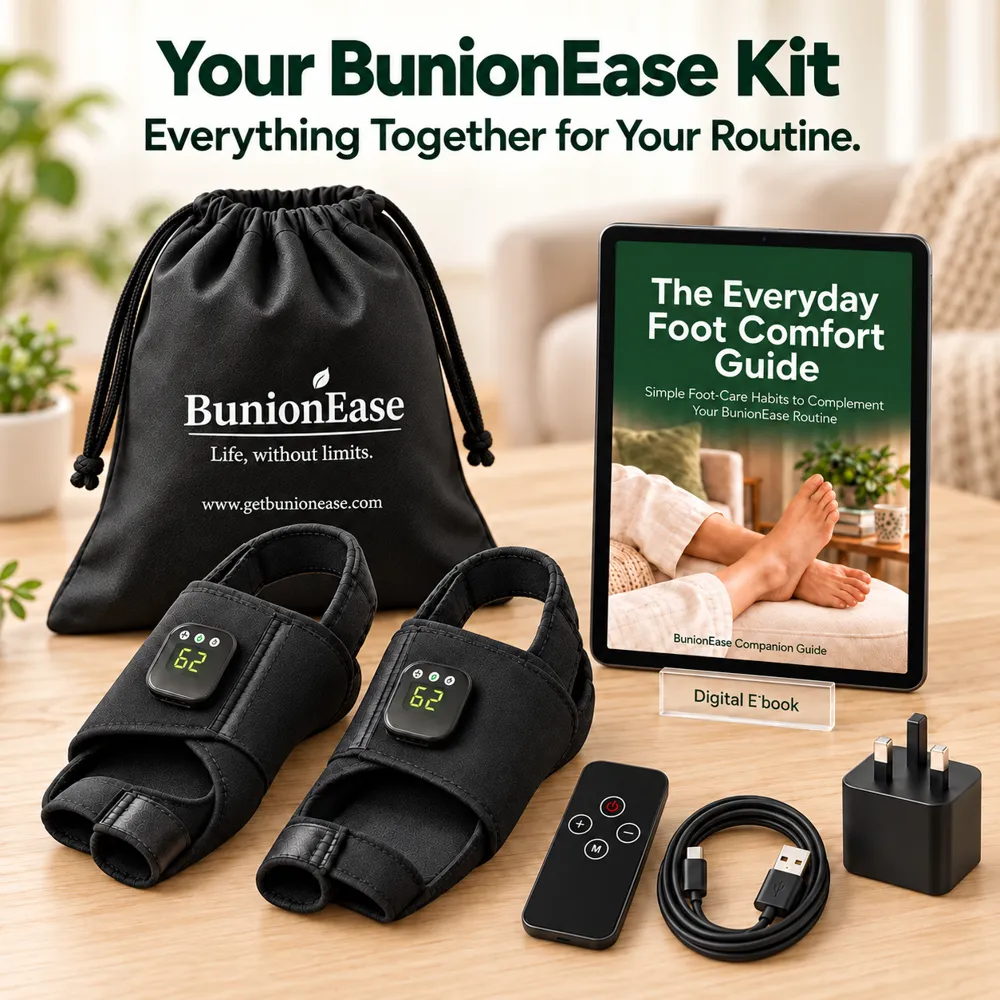
- BunionEase AlignPulse corrector (one per foot: the Duo Pack has a left and a right)
- Wireless remote control
- Charging kit with UK plug
- Carry bag for storage and travel
- Foot Comfort e-book with simple routines and shoe tips
What is EMS and what does it feel like?
EMS stands for electrical muscle stimulation. The device sends mild pulses that make the muscles gently tense and relax, the same basic idea used in many home muscle stimulators.
Most people describe it as a light tingling or tapping. It should never be painful. Always start on the lowest level and only go up if it feels comfortable. You can also wear the splint with the EMS switched off.
Getting a good fit
- Check the side: the Left Foot pack fits the left foot and the Right Foot pack fits the right. If both big toes are affected, the Duo Pack has one of each.
- Toe loop first: slide your big toe in until the loop sits just below the toenail, not on the joint.
- Midfoot strap next, then the heel strap. Fasten them snug, not tight. You should be able to slide a finger under each strap.
- The splint should sit flat along the inside of your foot, with the bunion area resting against the padding, not pressing on the frame.
- If your toes tingle in a numb way, look pale or feel cold, loosen the straps straight away.
Your simple 15-minute daily routine
Many people find it easiest to make it part of an evening routine, for example while watching the news. Doing it at the same time each day makes it easy to remember.
| When | What to do |
|---|---|
| Minute 0 | Sit or lie down with your foot clean and dry, and fasten the corrector |
| Minute 1 | Switch on and use the remote to choose the lowest level |
| Minutes 2 to 14 | Relax: read, watch TV or have a cup of tea. Turn up gently only if comfortable |
| Minute 15 | Switch off, remove, check your skin and store it in the carry bag |
5 common mistakes to avoid
- Fastening the straps too tight. Snug is enough; tight straps can rub and press.
- Starting on a high EMS level. Always begin at the lowest setting.
- Walking around or wearing it in shoes. BunionEase is for use while sitting or lying down.
- Sleeping in it. Use it for a session, then take it off.
- Using it on sore, broken or irritated skin. Wait until the skin has healed.
Who BunionEase suits, and who should ask a GP first
BunionEase is designed for adults who want a simple, at-home way to support an aching big toe and would like to try something before thinking about other options.
Speak to your GP or a podiatrist first if you have diabetes, poor circulation or reduced feeling in your feet, if the pain is severe or getting worse, or if the joint is red, hot or swollen. Don't use the EMS if you have a pacemaker or other implanted device, are pregnant or have epilepsy.
If it feels uncomfortable
- Turn the EMS level down, or switch it off and wear the splint on its own
- Loosen the straps slightly and check the toe loop isn't sitting on the joint
- Shorten the session to 5 to 10 minutes and build up
- Stop using it and speak to your GP if discomfort carries on or the skin is marked
Charging and care
Charge the device fully with the UK plug charger before first use and whenever the battery runs low. Wipe it with a dry or slightly damp cloth; don't submerge it in water. Store it in the carry bag between sessions, away from heat.
What to expect
You'll feel the splint gently guiding your big toe, and the EMS as a light pulsing. It should feel comfortable throughout. BunionEase supports the toe while you wear it; it doesn't remove the bunion, which the NHS explains only surgery can do. Everyone is different, so we don't promise results, but you have 90 days to see if it suits you.
Safety
BunionEase is a comfort and support device. It is not intended to diagnose, treat or cure any medical condition. See your GP or a podiatrist if pain is severe or getting worse. Do not use the EMS function if you have a pacemaker or other implanted device, are pregnant, have epilepsy, or have broken skin on the foot.
Step by step
- 1Charge itFully charge the device with the UK plug charger before first use.
- 2Sit comfortablySit or lie down with your foot clean and dry.
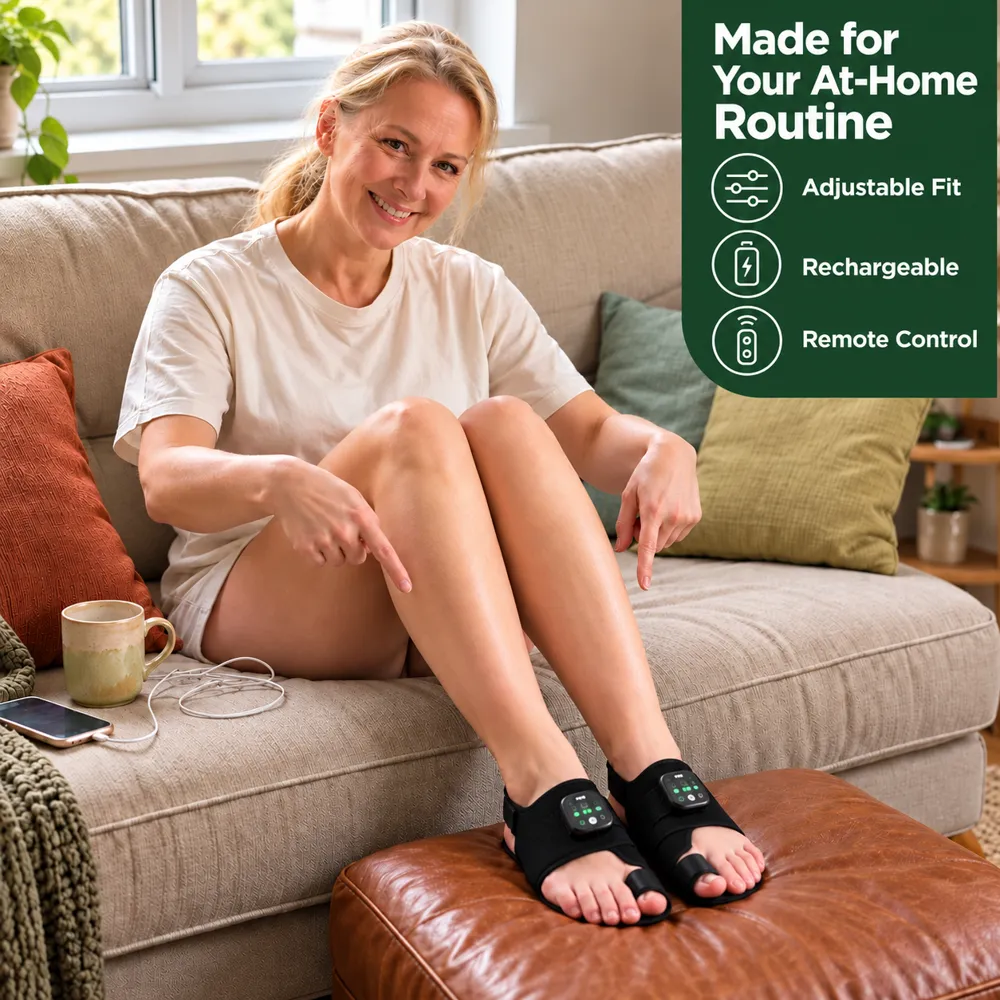
- 3Strap it onSlip your big toe into the toe loop, then fasten the midfoot and heel straps snugly, not tightly.
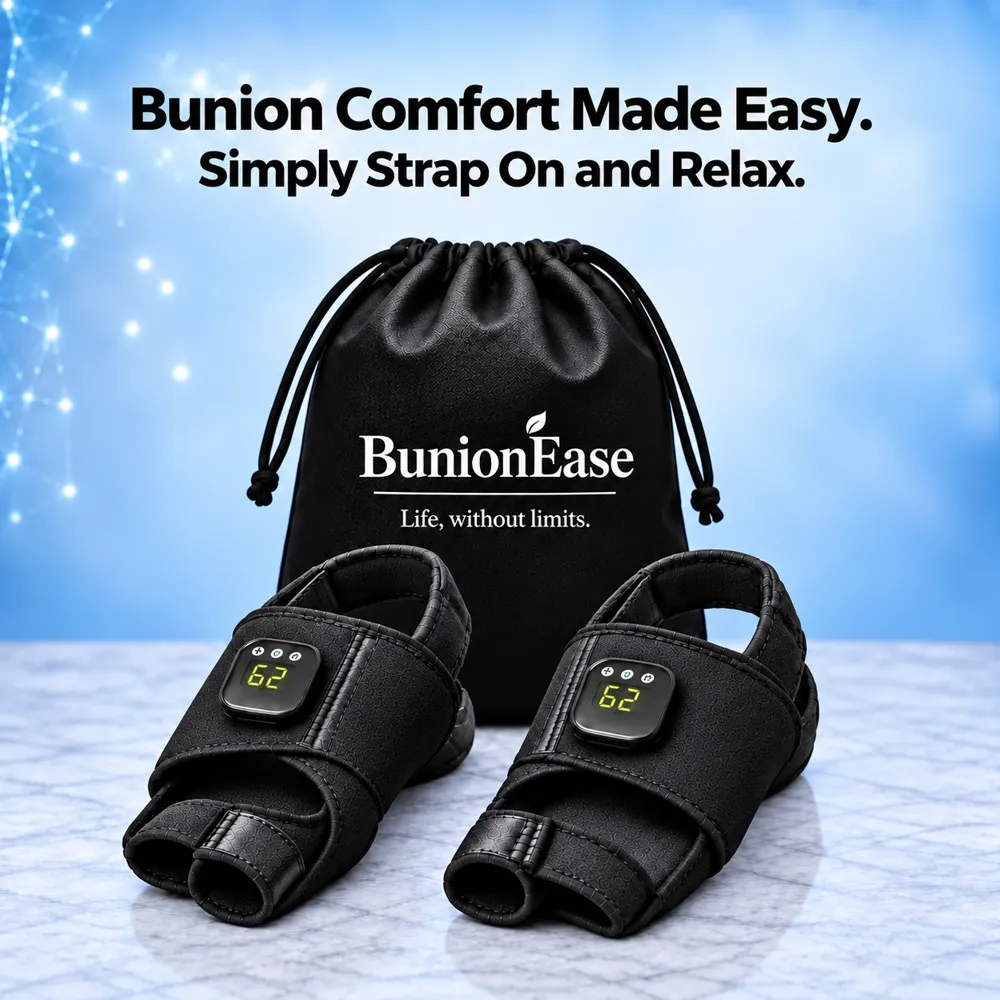
- 4Switch on AlignPulseTurn it on and use the remote to choose the lowest comfortable level.
- 5Relax for 15 minutesSit back while the splint supports your toe and the EMS works.
- 6Remove and checkTake it off, check your skin, and store it in the carry bag.
Choose your pack
Common questions
How do you wear a bunion corrector?
Sit down, put your big toe through the toe loop, then fasten the midfoot and heel straps snugly. Wear BunionEase for about 15 minutes while resting.
Does the EMS hurt?
It shouldn't. It feels like a light tingling. Start on the lowest level and turn it down or off if it's uncomfortable.
How often should I use BunionEase?
About 15 minutes a day at rest is the intended routine.
Can I sleep in it?
No. Use it for a 15-minute session and take it off before you go to sleep.
Can I wear it in shoes or while walking?
No. BunionEase is designed for use while sitting or lying down.
Can I use it without the EMS?
Yes, you can wear the splint with the stimulation switched off.
How do I charge it?
Use the charging kit with the UK plug that comes in the box. Charge fully before your first session.
Can I use it alongside toe spacers?
Not at the same time. Many people use a soft toe spacer in their shoes during the day and BunionEase at home in the evening.
Does it fit both feet?
Single Packs are made for either the left or the right foot. The Duo Pack includes one for each.
How soon will I notice a difference?
The splint supports your toe as soon as it's on. Beyond that everyone is different, so we don't make promises; that's why you have 90 days to try it.
Who shouldn't use EMS?
Don't use EMS with a pacemaker or implanted device, in pregnancy, with epilepsy, or on broken skin. Ask your GP if unsure.