
Hallux valgus
Hallux valgus corrector: what hallux valgus is and what helps
Last updated · Written by the BunionEase UK team
Quick answer
Hallux valgus is the medical name for a bunion: the big toe leans towards the other toes and a bony lump forms at its base. A hallux valgus corrector is a splint or spacer that supports the toe in a straighter position while worn. It can ease discomfort but can't remove the bump.
What is hallux valgus?
Hallux means big toe and valgus means angled away from the middle of the body. In hallux valgus, the big toe angles towards the second toe and the joint at its base, the first metatarsophalangeal joint, pushes outwards, forming the lump we call a bunion.
It usually develops slowly over years and can affect one or both feet.
Symptoms of hallux valgus
- A bony lump on the side of the foot at the base of the big toe
- The big toe pointing towards the other toes
- Pain, swelling or redness around the joint
- Hard skin on the bottom or side of the foot
- Difficulty finding shoes that fit comfortably
What causes hallux valgus?
The exact cause isn't always clear. Bunions often run in families, and are more common in women. Narrow, tight or high-heeled shoes may make them worse, and conditions like arthritis can play a part.
Hallux valgus treatment options
The NHS explains that surgery is the only way to remove a bunion and is usually considered only when pain is severe.
| Stage | Typical options |
|---|---|
| Mild discomfort | Wide shoes, bunion pads, ice, painkillers |
| Ongoing aches | Podiatrist advice, insoles, toe spacers, exercises, correctors at rest |
| Severe pain affecting daily life | GP referral to discuss surgery |
What does a hallux valgus corrector do?
A hallux valgus corrector holds the big toe away from the second toe while you wear it. Depending on the type, it may:
- Support the toe in a more natural position
- Take pressure off the joint
- Give a gentle stretch to tight tissues
- Make your foot feel more comfortable
Types of hallux valgus corrector
| Type | Support | When to wear |
|---|---|---|
| Silicone toe spacer | Light | In shoes |
| Soft splint | Medium | At rest |
| Hinged splint | Medium-firm | At rest |
| Aluminium splint with EMS (BunionEase) | Firm | At rest, about 15 min a day |
Safety and when to see a professional
See your GP if pain is getting worse, stops you doing normal activities, or hasn't eased after a few weeks of self-help, or if you have diabetes.
BunionEase is a comfort and support device. It is not intended to diagnose, treat or cure any medical condition. See your GP or a podiatrist if pain is severe or getting worse. Do not use the EMS function if you have a pacemaker or other implanted device, are pregnant, have epilepsy, or have broken skin on the foot.
BunionEase: a hallux valgus corrector for home
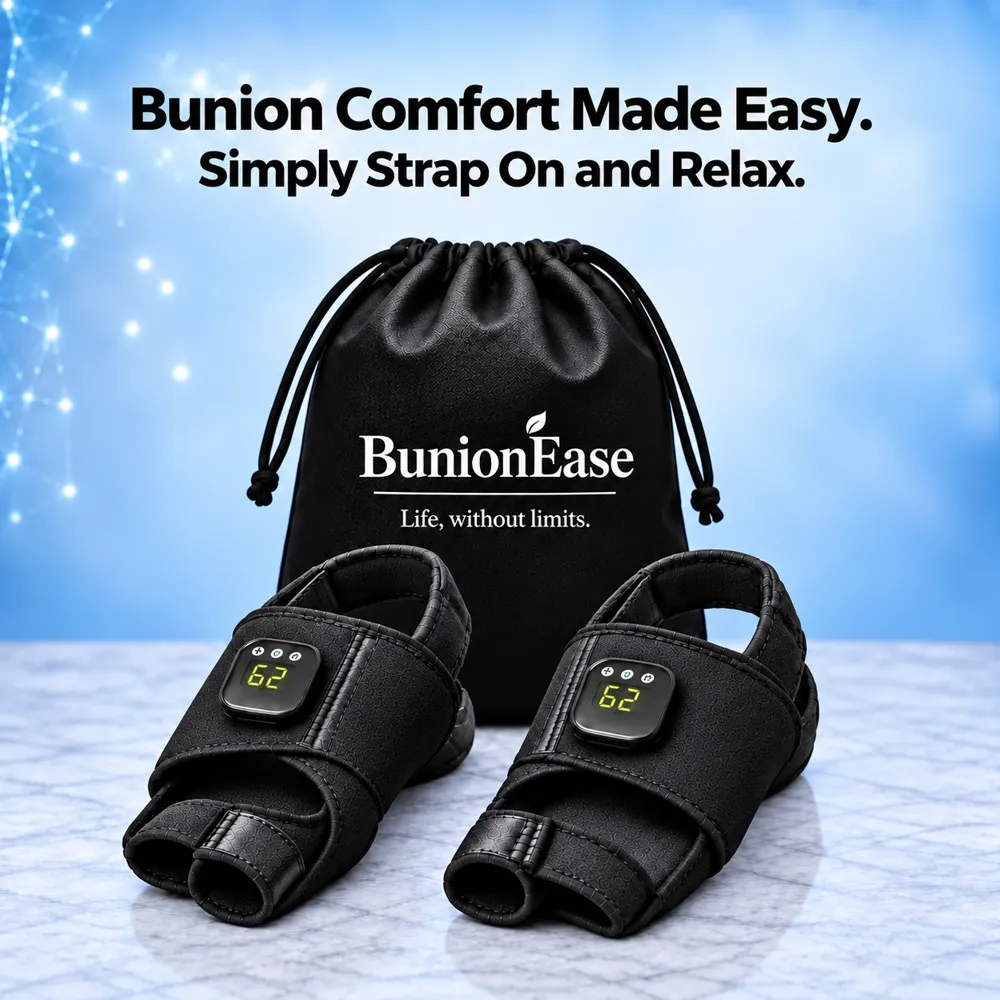
BunionEase pairs a structured aluminium toe splint with AlignPulse, gentle electrical muscle stimulation in the same device. It fastens at the toe, midfoot and heel, is controlled with a wireless remote and recharges with the UK plug included.
Use it sitting down for about 15 minutes a day. Choose the Left or Right Single Pack for one foot, or the Both Feet Duo Pack with free tracked UK delivery. Every order has a 90-day money-back guarantee.
Common questions
Is hallux valgus the same as a bunion?
Yes. Hallux valgus is the medical term for a bunion at the base of the big toe.
Can hallux valgus be corrected without surgery?
The bone change can't be corrected without surgery, but symptoms can often be eased with shoes, pads, exercises and correctors.
Do hallux valgus correctors work?
They can support the toe and ease discomfort while worn. They don't change the bones.
How long should I wear a hallux valgus corrector?
Follow the device instructions. BunionEase is designed for about 15 minutes a day at rest.
Is hallux valgus hereditary?
Bunions often run in families, though shoes and other factors can play a part too.
Can hallux valgus cause other foot problems?
It can lead to pain under the ball of the foot, hard skin and changes to the smaller toes. A podiatrist can advise.