Shoes for bunions
Best shoes for bunions UK: what to look for
Last updated · Written by the BunionEase UK team
Quick answer
The best shoes for bunions have a wide, deep toe box, a low heel, a soft upper that won't press on the bump and an adjustable fastening like laces or straps. The NHS recommends wide shoes with a low heel and soft sole. Avoid pointed toes and high heels.
Why shoes matter so much
Tight, narrow and high-heeled shoes squeeze the toes together and press on the bunion. Comfortable shoes won't remove a bunion, but they're the single most effective everyday step for less pain and rubbing.
Bunion-friendly shoe checklist
| Feature | Look for | Avoid |
|---|---|---|
| Toe box | Wide, deep, rounded | Pointed or shallow |
| Width | Wide fittings (E, EE or wider) | Standard width if it pinches |
| Heel | Low, under about 4cm | High heels |
| Upper | Soft leather, knit or stretch fabric | Stiff seams over the bump |
| Fastening | Laces, Velcro or buckles | Slip-ons that need tightness to stay on |
| Sole | Cushioned, flexible at the ball | Hard, thin soles |
Fitting tips
- Shop later in the day when feet are largest
- Measure both feet and fit the bigger one
- Leave a thumb's width at the end of the longest toe
- Make sure the bump sits in a soft area, not on a seam
- Try shoes with the socks, pads or insoles you'll wear
- Walk around the shop before you buy
Best styles for bunions
- Trainers and walking shoes with knit uppers
- Wide-fit lace-up brogues or Oxfords
- Adjustable sandals with straps behind the toes
- Soft leather wide-fit boots
- Slippers with a roomy, closed toe for home
Can shoes be stretched for bunions?
Many cobblers can stretch leather shoes over the bunion area. A shoe stretcher with a bunion attachment can help at home. Synthetic shoes stretch less.
Insoles and pads
A podiatrist may suggest insoles to improve foot position. Bunion pads or gel sleeves can stop rubbing, but remember they add bulk, so you may need a wider shoe.
BunionEase is a comfort and support device. It is not intended to diagnose, treat or cure any medical condition. See your GP or a podiatrist if pain is severe or getting worse. Do not use the EMS function if you have a pacemaker or other implanted device, are pregnant, have epilepsy, or have broken skin on the foot.
Good shoes by day, BunionEase at home
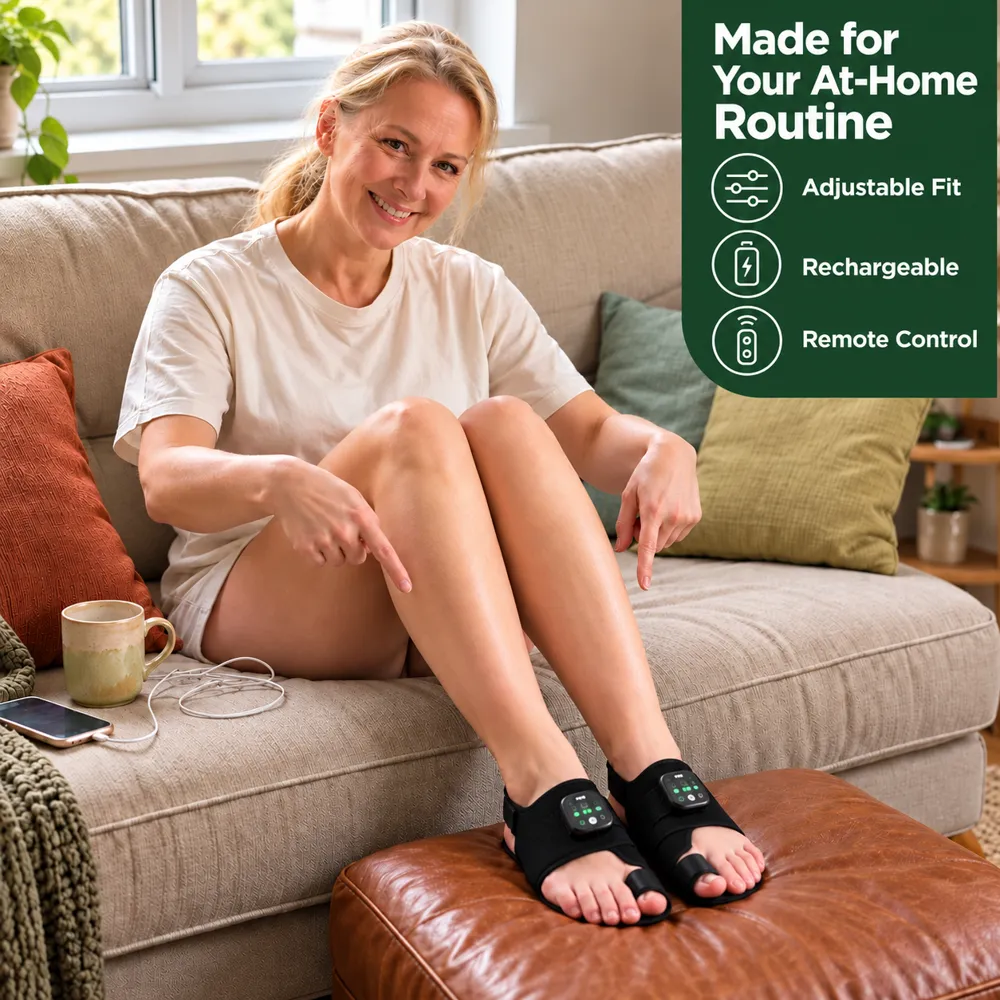
Shoes care for your feet while you're out; BunionEase is for when you're home. Its aluminium splint supports the big toe while gentle AlignPulse EMS stimulates the foot, for about 15 minutes, from your sofa.
Choose the Left or Right Single Pack, or the Both Feet Duo Pack with free tracked UK delivery, backed by a 90-day money-back guarantee.
Common questions
What shoes should I avoid with bunions?
High heels, pointed toes and narrow or stiff shoes that press on the bump.
Are trainers good for bunions?
Many are, especially with a wide toe box and soft knit upper.
Do wide-fit shoes help bunions?
Yes, wider shoes reduce pressure and rubbing on the bunion.
Can wearing the wrong shoes cause bunions?
Tight shoes may make bunions worse, though family history and foot shape play a big part too.
Are slippers OK for bunions?
Choose slippers with a roomy toe and some support rather than flat, tight ones.
Should I see a podiatrist about shoes?
A podiatrist can assess your feet and suggest shoes or insoles that suit you.