Bunion relief
Bunion relief at home: 9 ways to ease bunion pain
Last updated · Written by the BunionEase UK team
Quick answer
For quick bunion relief, switch to wide, low-heeled shoes, cushion the bump with a pad, hold an ice pack on it for up to 5 minutes and take a painkiller if needed. Over time, gentle exercises and a corrector at home may help you feel more comfortable. See your GP if pain doesn't ease.
Why do bunions hurt?
A bunion pushes the big toe joint outwards, so it rubs against shoes and can become red, swollen and sore. The changed angle of the toe also puts extra pressure on the joint and the ball of the foot.
9 ways to ease bunion pain at home
These steps are based on NHS self-help advice, plus a few simple extras.
- 1. Wear wide shoes with a low heel and soft sole
- 2. Use a bunion pad or gel sleeve to stop rubbing
- 3. Hold an ice pack wrapped in a towel on the bunion for up to 5 minutes at a time
- 4. Take paracetamol or ibuprofen if needed (check the leaflet)
- 5. Lose weight if you're overweight, to reduce pressure on your feet
- 6. Rest your feet up after long periods standing
- 7. Try gentle toe exercises daily
- 8. Use a toe spacer or bunion corrector for support
- 9. Ask a podiatrist about insoles
Quick relief vs longer-term comfort
| Goal | Try |
|---|---|
| Relief right now | Ice pack, painkiller, shoes off and feet up |
| Comfortable days | Roomy shoes, pads, gel sleeves |
| A daily routine | Exercises, a corrector at home |
| Expert help | Podiatrist for insoles; GP if pain is severe |
What to avoid
- High heels and pointed shoes
- Shoes that press on the bump
- Wearing any device that causes pain or numbness
- Ignoring pain that keeps getting worse
Bunion pain at night
Bunions can ache more at the end of the day. Try ice in the evening, keep your feet raised and avoid tight bedding over your toes. A short session with a corrector before bed may feel soothing, but BunionEase isn't designed to be worn overnight.
When to see a GP
See your GP if pain hasn't improved after trying self-help for a few weeks, if it stops you doing everyday things, if the bunion is getting worse, or if you have diabetes. Get urgent advice if the area becomes hot, very red or you feel unwell.
BunionEase is a comfort and support device. It is not intended to diagnose, treat or cure any medical condition. See your GP or a podiatrist if pain is severe or getting worse. Do not use the EMS function if you have a pacemaker or other implanted device, are pregnant, have epilepsy, or have broken skin on the foot.
Make BunionEase part of your relief routine
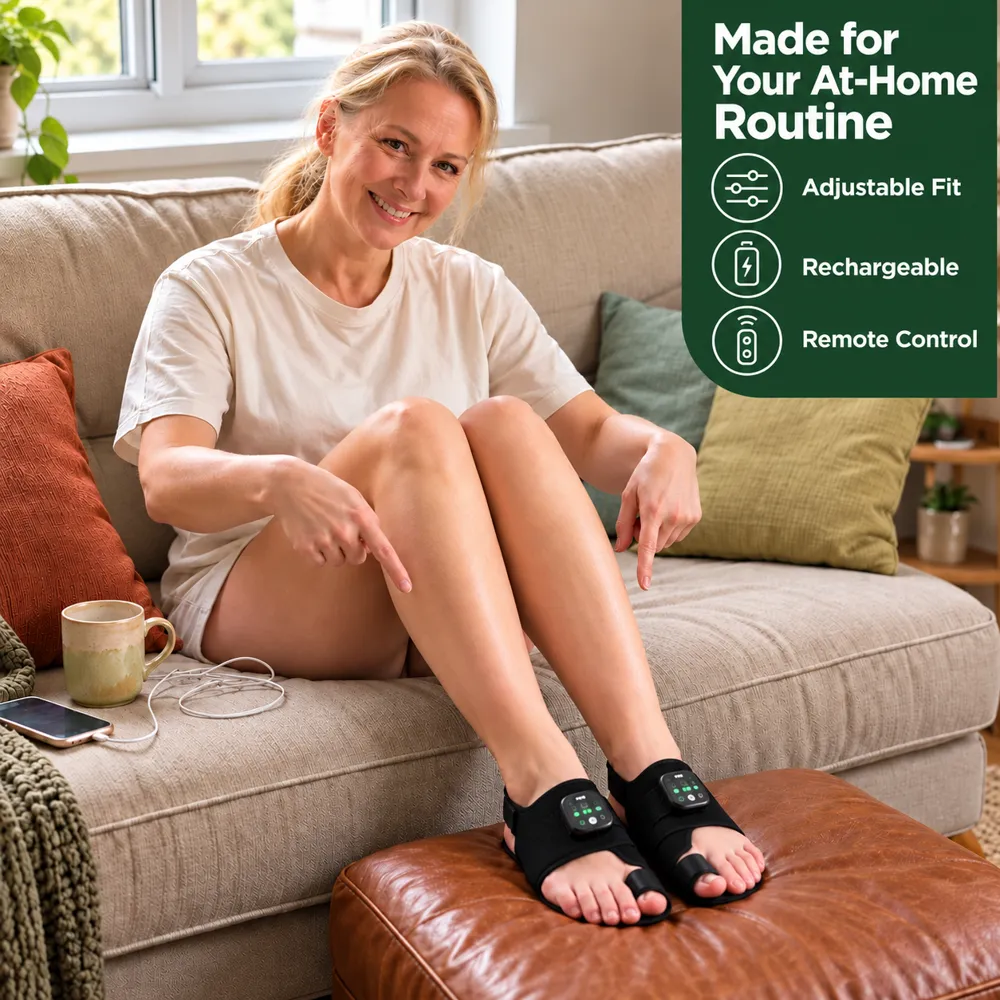
BunionEase lets you rest and look after your feet at the same time. The aluminium splint supports your big toe while gentle AlignPulse EMS stimulates the foot muscles, for about 15 minutes, controlled from a wireless remote.
Choose the Left or Right Single Pack, or the Both Feet Duo Pack with free tracked UK delivery. 90-day money-back guarantee included.
Common questions
What is the fastest way to relieve bunion pain?
Take your shoes off, hold an ice pack on it for up to 5 minutes and take a painkiller if suitable.
Does ice or heat help bunions?
The NHS suggests ice packs for bunion pain. Wrap ice in a towel and use for up to 5 minutes at a time.
Can bunion pads help?
Yes, they cushion the bump and stop shoes rubbing.
Why does my bunion hurt more at night?
Joints often ache after a day on your feet. Rest, ice and comfortable shoes in the day can help.
Can massage help bunion pain?
Some people find gentle foot massage soothing. Avoid pressing hard on a red or swollen joint.
When is bunion pain serious?
If it's severe, getting worse, stops daily activities or you have diabetes, see your GP.