
Buyer's question
Do bunion correctors work? An honest UK guide
Last updated · Written by the BunionEase UK team
Quick answer
Bunion correctors can't reshape bone, so they won't make a bunion disappear. What a good corrector can do is hold the big toe in a straighter position while you wear it and take pressure off the joint, which many people find more comfortable. Results vary from person to person.
What is a bunion, and why does it matter here?
A bunion (hallux valgus) is a bony lump on the side of the foot at the base of the big toe. The big toe gradually leans towards the other toes, the joint sticks out, and shoes start to rub.
Because the change is in the bones and joint, the NHS says surgery is the only way to remove a bunion. That's the most important thing to understand before you buy any corrector: it's a comfort and support tool, not a fix.
So what do bunion correctors actually do?
A corrector works mechanically. While it's on, it guides the big toe away from the second toe. That can:
- Take some pressure off the big toe joint
- Give the toe and surrounding tissues a gentle stretch
- Make the foot feel more comfortable after a long day
- Give you a simple daily routine to look after your feet
What bunion correctors can't do
Be wary of any product that claims to cure, reverse or permanently straighten a bunion. No splint does that.
- They don't remove the bony bump
- They don't change bone structure
- The toe usually returns to its usual position when you take it off
- They don't replace advice from a GP or podiatrist
What does the NHS recommend for bunions?
The NHS suggests self-help first: wear wide shoes with a low heel and soft sole, use bunion pads to stop shoes rubbing, hold an ice pack on the area for up to 5 minutes at a time, take painkillers like paracetamol or ibuprofen, and try to lose weight if you're overweight. A podiatrist may suggest insoles, toe spacers or exercises.
A corrector fits in alongside these steps. It isn't a replacement for good shoes, and it's not a reason to put off seeing your GP if pain is getting worse.
Which type of corrector works best for what?
Different correctors do different jobs. Matching the type to your need is the biggest factor in whether it feels like it works.
| Your goal | Type to consider | Why |
|---|---|---|
| Stop shoes rubbing | Bunion pad or gel sleeve | Cushions the bump inside shoes |
| Light support while walking | Gel toe spacer | Thin enough to fit in roomy shoes |
| Firmer support at rest | Rigid or hinged splint | Holds the toe more securely |
| Support plus a relaxing routine | Splint with EMS (BunionEase) | Splint support plus gentle muscle stimulation |
How to get the most from a bunion corrector
How you use a corrector matters as much as which one you buy.
- Use it regularly: short daily sessions beat occasional long ones
- Wear it at rest unless it's made for shoes
- Fit it snugly but never tightly
- Pair it with roomy shoes and simple toe exercises
- Give it a fair trial: buy from a seller with a long guarantee
Safety and who should check first
Stop using any corrector that causes pain, numbness or skin damage. If you have diabetes, poor circulation or reduced feeling in your feet, check with a health professional first.
BunionEase is a comfort and support device. It is not intended to diagnose, treat or cure any medical condition. See your GP or a podiatrist if pain is severe or getting worse. Do not use the EMS function if you have a pacemaker or other implanted device, are pregnant, have epilepsy, or have broken skin on the foot.
Is BunionEase worth trying?
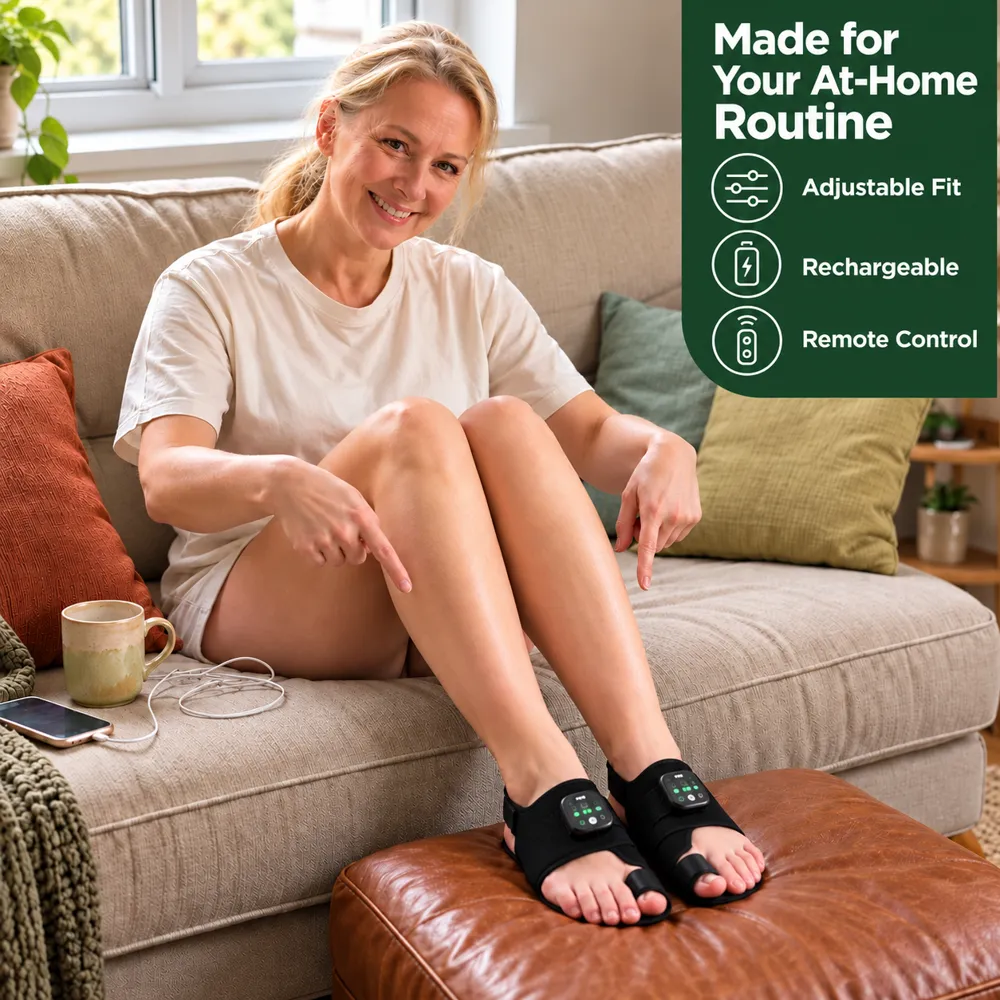
If you want firmer support than a gel spacer and like the idea of a short, relaxing daily routine, BunionEase is designed for exactly that. It pairs an aluminium toe splint with gentle AlignPulse EMS, a wireless remote and three-point fastening, used for about 15 minutes a day while you sit.
You can try it at home with a 90-day money-back guarantee. Choose a Left or Right Single Pack for one foot, or the Both Feet Duo Pack with free tracked UK delivery.
Common questions
Can a bunion corrector straighten my toe permanently?
No. The toe is held straighter while the corrector is on, but a bunion is a change in the bone and only surgery removes it.
Can a bunion corrector make a bunion worse?
A corrector that's too tight or worn for too long can cause soreness or rubbing. Start with short sessions and stop if it hurts.
How long does it take to notice a difference?
Many people notice how a corrector feels straight away. Any comfort benefit varies, so give it a few weeks of regular use.
Do podiatrists recommend bunion correctors?
Podiatrists may suggest toe spacers, insoles or exercises depending on your feet. It's worth asking one for advice that suits you.
Are night splints better?
Night splints are worn for longer but some people find them uncomfortable for sleep. BunionEase is designed for short daytime sessions at rest instead.
What's the alternative to a corrector?
Wide shoes, bunion pads, ice, painkillers, exercises and, if pain is severe, a referral for surgery.