Bunion pads
Bunion pads: types, how to use them and which to choose
Last updated · Written by the BunionEase UK team
Quick answer
Bunion pads are soft cushions that sit over the bony bump to stop your shoe rubbing it. The NHS suggests them as a simple self-help step. Gel pads are reusable, foam and felt pads are cheap and disposable, and sleeves hold the pad in place. They ease rubbing but don't support or straighten the toe.
What are bunion pads?
Bunion pads are cushions that protect the bunion from pressure and friction inside your shoe. They're one of the cheapest and easiest ways to make shoes more comfortable, and you can buy them from most UK pharmacies and online.
Types of bunion pad compared
| Type | Material | Reusable? | Best for |
|---|---|---|---|
| Gel pad | Silicone gel | Yes, washable | Everyday cushioning |
| Gel sleeve | Gel inside a fabric sleeve | Yes | Stays in place without sticking |
| Foam pad | Adhesive foam | No | Short-term use, thin shoes |
| Felt pad | Adhesive felt | No | Reducing pressure, often used by podiatrists |
| Toe spacer with shield | Gel | Yes | Cushioning plus light toe separation |
How to fit a bunion pad
- Wash and dry your foot first
- Place the thickest part of the pad over the bump
- For adhesive pads, press firmly and smooth out edges
- Put on roomy shoes; a pad adds bulk
- Check your skin at the end of the day
What bunion pads can and can't do
Pads cushion and protect. They don't hold the toe straighter or remove the bunion. For support, people often add a toe spacer in shoes or a corrector at home.
Choosing the right bunion pad
- Gel if you want something reusable
- A sleeve if adhesive pads irritate your skin
- Thin pads for close-fitting shoes
- Felt or foam if a podiatrist recommends them
Safety tips
BunionEase is a comfort and support device. It is not intended to diagnose, treat or cure any medical condition. See your GP or a podiatrist if pain is severe or getting worse. Do not use the EMS function if you have a pacemaker or other implanted device, are pregnant, have epilepsy, or have broken skin on the foot.
- Replace adhesive pads regularly
- Wash gel pads as directed
- Stop using if you get a rash or blisters
- People with diabetes should check with a podiatrist first
Bunion pads by day, BunionEase at home
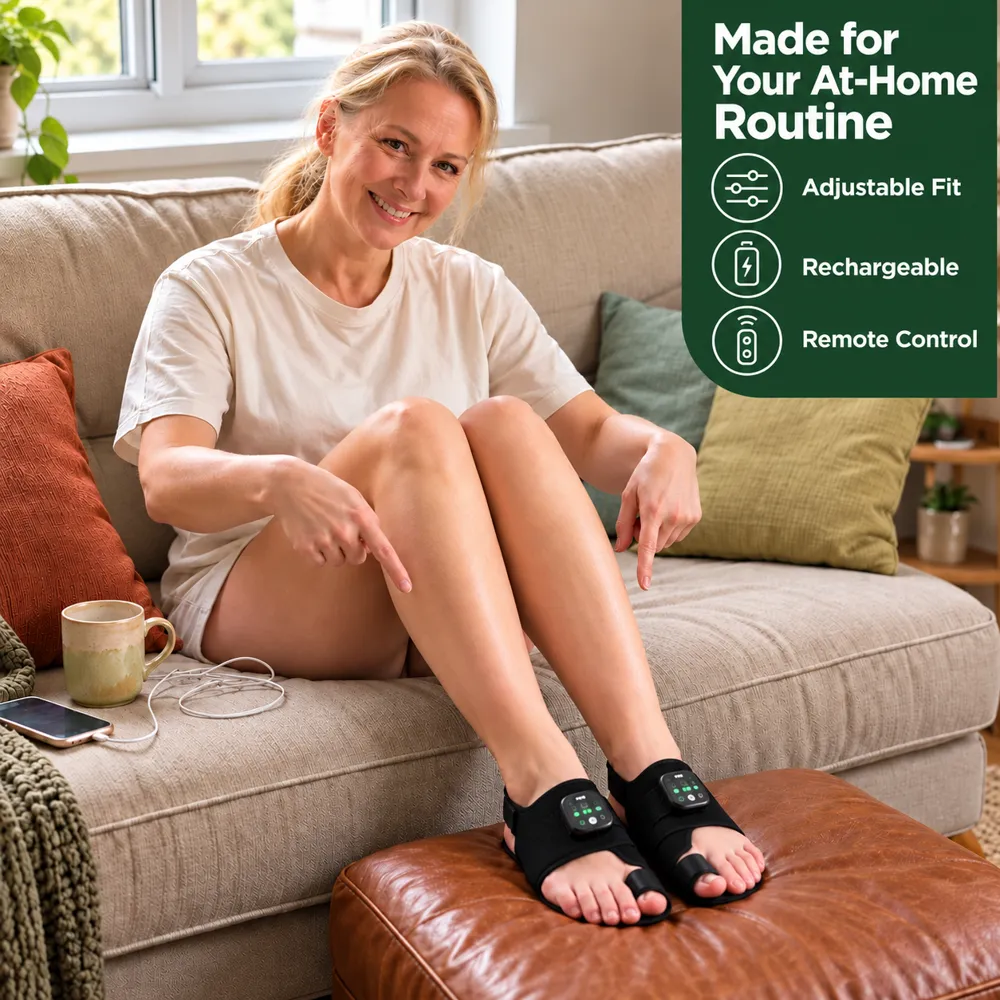
Pads handle the rubbing in shoes; BunionEase handles support while you relax. Its aluminium splint supports the big toe and gentle AlignPulse EMS stimulates the foot muscles, for about 15 minutes a day.
Choose the Left or Right Single Pack, or the Both Feet Duo Pack with free tracked UK delivery, with a 90-day money-back guarantee.
Common questions
Do bunion pads work?
They're good at stopping shoes rubbing the bump. They don't change the bunion itself.
How long do bunion pads last?
Adhesive pads usually last a day or so. Gel pads can last weeks to months with care.
Can I wear bunion pads all day?
Yes, most are designed for daytime wear in shoes. Check your skin afterwards.
Are gel or felt bunion pads better?
Gel is reusable and soft; felt is thin and good at reducing pressure. Both work well.
Where can I buy bunion pads in the UK?
Most pharmacies and supermarkets sell them, as well as online shops.
Can I use bunion pads with a corrector?
Yes. Use pads in shoes and a corrector like BunionEase at rest.