
Bunion splint
Bunion splint guide: types, how to wear one and how to choose
Last updated · Written by the BunionEase UK team
Quick answer
A bunion splint is a strapped support that holds the big toe in a straighter position while you wear it, usually at rest. Types range from soft night splints to hinged and rigid splints. A good splint fits snugly without pinching. It can ease discomfort but can't remove a bunion.
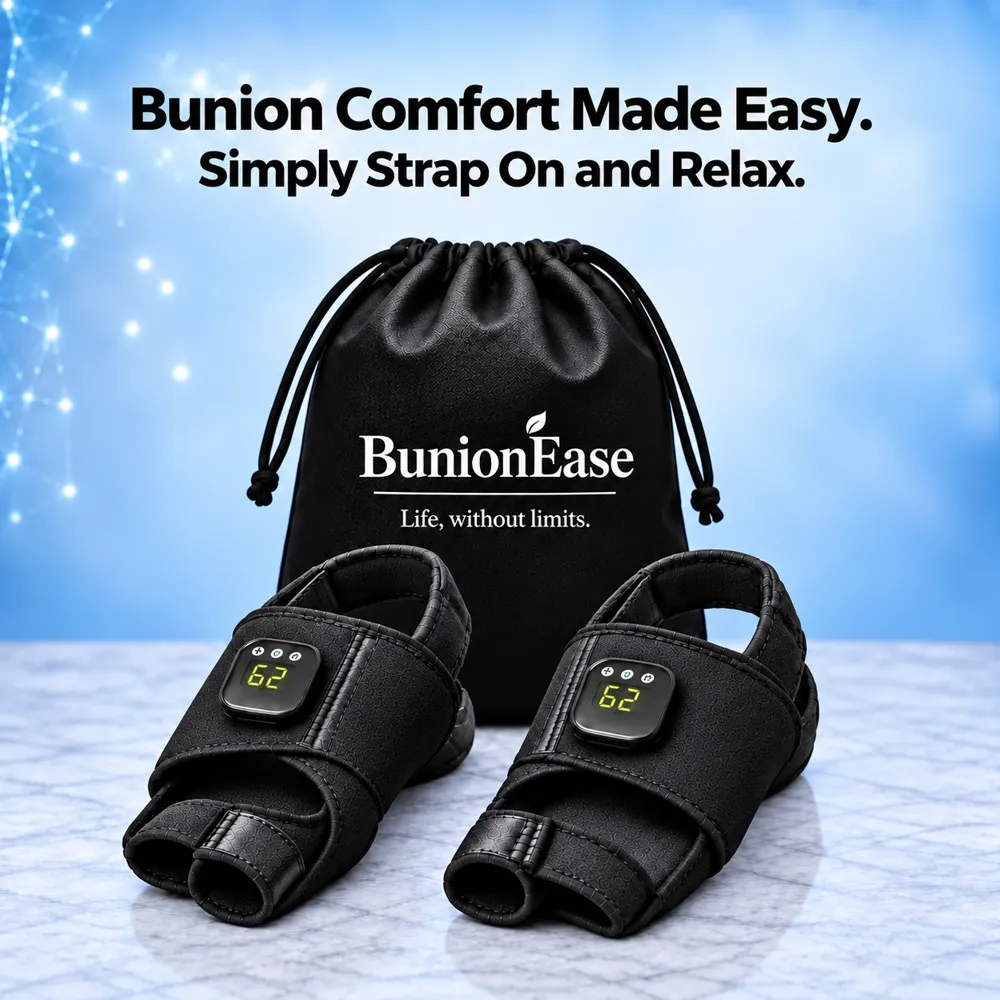
What is a bunion splint?
A bunion splint wraps around the foot and big toe, using straps and a firm bar or panel to guide the toe away from the second toe. It's firmer than a gel spacer and is usually worn while sitting, resting or, for some types, sleeping.
Types of bunion splint
| Type | Support | When worn | Notes |
|---|---|---|---|
| Soft splint | Light-medium | At rest | Comfortable, less structured |
| Night splint | Medium | Overnight | Some find it hard to sleep in |
| Hinged splint | Medium-firm | At rest, sometimes walking | Lets the toe bend |
| Rigid aluminium splint | Firm | At rest | Most structured hold |
| Rigid splint with EMS (BunionEase) | Firm + stimulation | At rest, about 15 min a day | Adds gentle muscle stimulation and remote |
What a splint can and can't do
A splint can support the toe, take pressure off the joint and give a gentle stretch while worn. It can't change bone structure. The NHS explains that surgery is the only way to remove a bunion.
How to choose a bunion splint
- Correct foot: left, right or a pair
- Adjustable straps at the toe, midfoot and heel for a secure hold
- Padding where it touches the bump
- Easy to fasten, especially if bending is hard
- Clear wear-time instructions
- A guarantee long enough to try it properly
How long should you wear a bunion splint?
Always follow the instructions for your splint. Start with short sessions and build up. BunionEase is designed for about 15 minutes a day at rest, which makes it easy to fit into an evening routine.
Bunion splint safety tips
BunionEase is a comfort and support device. It is not intended to diagnose, treat or cure any medical condition. See your GP or a podiatrist if pain is severe or getting worse. Do not use the EMS function if you have a pacemaker or other implanted device, are pregnant, have epilepsy, or have broken skin on the foot.
- Never fasten so tightly that toes go numb or change colour
- Check your skin afterwards for redness or blisters
- Don't walk in a splint unless it's designed for walking
- Stop and ask advice if pain increases
Why BunionEase is more than a splint
BunionEase combines a structured aluminium toe splint with AlignPulse, gentle EMS built into the same device. Three-point fastening keeps it in place, a wireless remote lets you change the level without bending, and it recharges with a UK plug.
Choose the Left or Right Single Pack, or the Both Feet Duo Pack with free tracked UK delivery. 90-day money-back guarantee included.
Common questions
Do bunion splints work?
They can support the toe and ease discomfort while worn. They don't remove the bunion.
Should I wear a bunion splint at night?
Only if it's designed for night use. Many people find short daytime sessions easier. BunionEase is for daytime use at rest.
Can I walk in a bunion splint?
Most rigid splints aren't for walking. Some hinged splints are. BunionEase is for use at rest.
Which is better, a soft or rigid splint?
Soft splints are gentler; rigid splints give firmer support. It depends on your comfort and needs.
Can a splint stop my bunion getting worse?
There's no guarantee. Good shoes and podiatrist advice are the best ways to look after your feet.
Can I use a splint after bunion surgery?
Only with your surgeon's agreement. Follow their aftercare plan.