
Comparison
Bunion corrector vs toe spacer: which is better for you?
Last updated · Written by the BunionEase UK team
Quick answer
A toe spacer is a small soft insert worn between the toes, often in shoes, for light support. A bunion corrector is a strapped splint worn at rest that holds the big toe more firmly. Spacers suit all-day comfort; correctors suit firmer support at home. Many people use both.
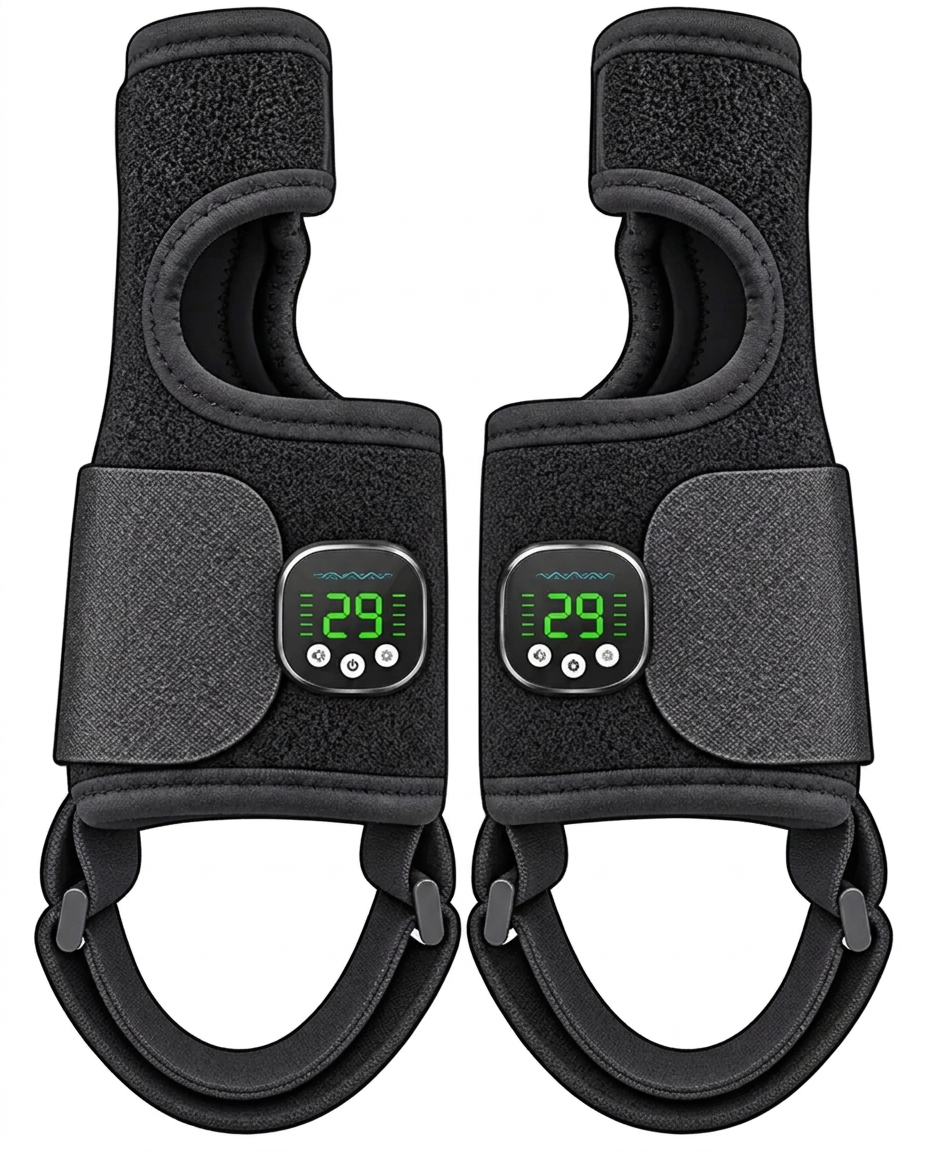
The quick comparison
| Toe spacer | Bunion corrector (splint) | |
|---|---|---|
| What it is | Soft gel or silicone insert | Strapped splint around toe and foot |
| Support | Light | Firm |
| Wear in shoes? | Yes, if shoes are roomy | No, at rest |
| Typical use | During the day | Short sessions at home |
| Adjustable? | No | Yes, with straps |
| Extras | None | Some, like BunionEase, add EMS and a remote |
What is a toe spacer?
A toe spacer (or toe separator) sits between the big toe and second toe and gently pushes them apart. It's thin, inexpensive and can be worn in wider shoes. Some cover all five toes and are used at rest to spread the toes.
What is a bunion corrector?
A bunion corrector is a splint that wraps around the foot and holds the big toe away from the second toe. Because it's strapped on, it can give firmer, more structured support than a spacer. Most are designed to be worn while sitting or lying down.
Pros and cons of each
- Toe spacer pros: discreet, cheap, wearable while walking
- Toe spacer cons: light support, can slip, may crowd tight shoes
- Corrector pros: firmer support, adjustable, stays in place
- Corrector cons: worn at rest, bulkier, costs more
Which should you choose?
| If you... | Choose |
|---|---|
| Want something to wear on walks or at work | Toe spacer |
| Want firmer support while relaxing | Bunion corrector |
| Find bending to fit things difficult | Corrector with easy straps and a remote |
| Want the most complete routine | Both: spacer by day, corrector at home |
Can either one fix a bunion?
No. The NHS explains that bunions are a change in the bone and only surgery removes them. Both spacers and correctors are comfort and support tools.
BunionEase is a comfort and support device. It is not intended to diagnose, treat or cure any medical condition. See your GP or a podiatrist if pain is severe or getting worse. Do not use the EMS function if you have a pacemaker or other implanted device, are pregnant, have epilepsy, or have broken skin on the foot.
Using both: a simple daily routine
Wear a slim spacer or pad in roomy shoes during the day, then relax with BunionEase for 15 minutes in the evening. BunionEase pairs an aluminium toe splint with gentle AlignPulse EMS, fastens at three points and adjusts with a wireless remote.
Choose the Left or Right Single Pack, or the Both Feet Duo Pack with free tracked UK delivery, backed by a 90-day money-back guarantee.
Common questions
Is a toe spacer or splint better for bunions?
Spacers give light support in shoes; splints give firmer support at rest. The right choice depends on how you'll use it.
Can I wear a toe spacer all day?
Many people wear them for several hours in roomy shoes. Build up gradually and stop if it rubs.
Can I sleep in a toe spacer?
Some people do, but check the product instructions. BunionEase is not designed for overnight use.
Do podiatrists recommend toe spacers?
Podiatrists sometimes suggest them. A podiatrist can tell you what suits your feet.
Can I use a spacer and a corrector together?
Use them at different times: the spacer in shoes and the corrector at rest.
Which is cheaper?
Spacers are usually cheaper. Correctors cost more but give firmer, adjustable support.